
Oliver O'Bryan
Every family deserves its own KINKORA.
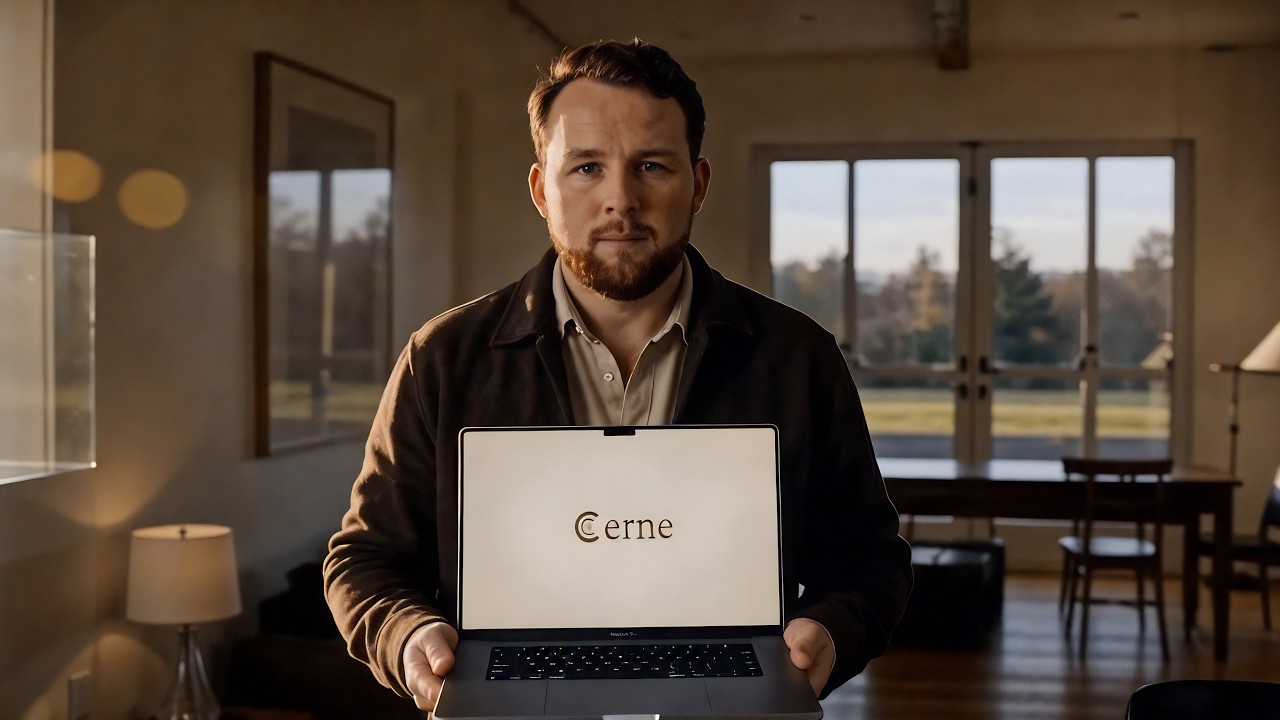
The founder film — why Cerne exists, in Oliver's own words.
On my father's side of the family there is a book called KINKORA. It was begun in the 1780s, and every generation since has added to it: handwritten notes, clippings, a family tree across its pages, and the voyage out of Kilkenny in 1848. Almost nobody has anything like it.
And none of it is digital. It is one copy, in one house. Nobody far away can add to it, nobody can hear a single voice in it, and if it were lost in a fire, a flood or a move, nearly 250 years would go with it. The idea is priceless. The format is fragile.
Not long ago I watched my father start a notebook he had bought at an airport, addressed to his granddaughters. It was one of the most beautiful things I had seen in a long time, and it frightened me a little, because it is one book, written once, by hand. It holds the ink, not the voice.
I grew up between a Swiss mother and an Australian father, two countries and two ways of remembering. My father's side had KINKORA; my parents kept us in eighteen years of photograph albums, every picture printed and captioned by hand. It taught me early that where you come from doesn't keep itself. You have to hold onto it deliberately.
My working life has been in finance, and working around wealth taught me something uncomfortable. Enormous care goes into preserving the money, and almost none into preserving what made a family a family in the first place. The structures for one are centuries old. For the other there is a shoebox and good intentions.
I built Cerne so that every family can have its own KINKORA: kept a little at a time, by everyone in it, in their own voices, and handed on. Whether you are afraid of losing someone, or someone is already gone, it is worth starting while there is still someone to ask.
— Oliver O'Bryan, Founder
Write to me directly at oliver@mycerne.com.
KINKORA, from then to now
1780s
KINKORA begins
A family book begun on Oliver’s father’s side of the family.
Source: Oliver O’Bryan’s account above“It was begun in the 1780s.”
1848
The voyage out of Kilkenny
The voyage is kept across its pages, alongside handwritten notes, clippings and a family tree.
Source: Oliver O’Bryan’s account above“The voyage out of Kilkenny in 1848.”
Through the generations
One book, handed on
Every generation adds to it. Nearly 250 years of a family, held in one copy, in one house.
Source: Oliver O’Bryan’s account above“Every generation since has added to it”; “one copy, in one house.”
Today
From KINKORA to Cerne
Oliver built Cerne so that every family can keep its own living record, a little at a time, in their own voices, and hand it on.
Source: Oliver O’Bryan’s account above“I built Cerne so that every family can have its own KINKORA.”
These milestones follow the founder’s family account; they are not independently verified archival dates.
Your family's record belongs to your family.
A family's record is the most personal thing there is — so Cerne is built to protect it. Your record is private by default and kept in trust for your family alone, on a system that's carefully built and tested to stay standing: secure, resilient, and hardened against attack.
Every keeper names a successor, so the record outlives any one of us. You can take a full copy of your record whenever you like. And if Cerne ever closed, every family would get notice and a full copy before anything was deleted.
And nothing in your record is ever invented. Cerne only finds, arranges and renders what your family has genuinely given it. The record is only ever true.
- Private by default
- Never sold or used to train anything
- A named successor for every keeper
- Nothing invented, ever
What we're doing now.
Our first circle has spoken.
Fifty people around the world tried Cerne and told us what to change. We've reshaped how a record begins, brought keepsakes to day one, and made our promises specific. Next, a wider round with families we've never met.
We're opening Cerne to a first circle of families.
A small, trusted group laying their first rings with us — shaping what Cerne becomes, one afternoon at a time.
The Improbability of Us — why we'll never show you a single number.
A note from the workshop on why our most-loved keepsake refuses the one thing people keep asking for.
Heartwood: where the name comes from.
Cerne is Portuguese for heartwood — the dense, dark core a tree builds slowly, ring by ring. Here's why it stuck.